
Easy Soccer Drills Young Players Can Practice at Home
Young players improve fastest when practice is simple, frequent, and focused. You don’t need a pitch or a coach to get better—just a ball, a little space, and a plan.
This guide gives easy, practical drills that kids can do safely at home, with suggestions for affordable gear to make sessions more productive and fun.
1. Ball Mastery: 10–15 Minutes Daily
Ball mastery builds confidence and control. Key moves to practice: inside/outside touches, toe taps, sole rolls, and pull-push. Keep the ball close and move at game speed for short bursts.
Tools that help: a simple dribbling cone setup or a compact dribbling trainers to practice tight control and consistent touch patterns.
2. Passing and First Touch with a Wall
Passing against a wall sharpens accuracy, timing, and first touch. Stand 4–8 yards from a rebound surface and practice one-touch, two-touch, and driven passes. Focus on firm technique and controlling the return with the first touch.
For younger kids or smaller yards, a backyard rebound net converts any wall-less area into a reliable passing partner—great for working on both short passes and volleys. Try using a rebounder net to keep the ball returning at predictable angles.
3. Dribbling Circuits for Change of Direction
Set up 6–8 cones (or markers like water bottles) in a straight line or zigzag pattern. Have the player dribble through using different surfaces of the foot—inside, outside, sole—then accelerate to the next cone. Repeat with left and right foot emphasis.
If you want a ready-to-go option that includes hurdles and cones, consider a compact agility kit or agility ladder set to build footwork patterns and dribbling coordination.
4. Shooting and Finishing in Small Goals
Shooting practice improves technique and composure. Use small goals, cones as posts, or a rebounder to create finishing reps. Focus on placement over power: low corners and near-post chips are valuable targets for young players.
To simulate rebounds and volleys, a kick return trainer is useful—especially for practicing volleys, half-volleys, and first-time shots without chasing the ball after every attempt.
5. Speed, Agility, and Quickness (SAQ)
Foot speed and agility matter more than raw sprinting for youth soccer. Short ladder drills, quick-change sprints, and cone-based shuttle runs improve acceleration and coordination.
Using a structured kit speeds progress—look for a speed and agility set to get ladders, cones, and mini-hurdles in one package and build progressive workouts that stay fun.
6. Small-Sided Game Simulations
Simulate match situations with 1v1, 2v2, or “mirror” drills where a parent or sibling defends lightly. Short, competitive reps teach decision-making under pressure more effectively than isolated touches.
Use a training mannequin or inflatable defender to create realistic passing lanes and wall formations for free-kicks or dribble penetration drills—an affordable inflatable mannequin works well in the backyard.
7. Goalkeeper-Specific Work (If Your Child Keeps)
Goalkeepers can practice handling and footwork at home. Work on low-to-high catch transitions, quick feet around cones, and reaction saves using a soft ball or rebounder. Short sessions focused on technique prevent fatigue and maintain form.
If your child is a keeper, having proper protective gear matters—consider youth-specific items, including youth shin guards for drills that include tackling or blocking, and keep gloves in good shape with recommended glove care products from store resources.
Checklist: Quick At-Home Training Plan
- Warm-up: 5 minutes light jog + dynamic stretches
- Ball mastery: 10–15 minutes (inside/outside, sole, toe taps)
- Passing: 10 minutes (wall or rebounder)
- Dribbling/Footwork: 10 minutes (cones or ladder)
- Shooting/Finishing: 10 minutes (small goals or kick return)
- SAQ: 5–10 minutes (ladder or speed set)
- Cool-down: 3–5 minutes light stretch
Safety and Gear Tips for Home Practice
Keep sessions age-appropriate and supervised. Clear the training area of obstacles and use soft or foam balls for very young kids. For protection during higher-contact drills, make sure players wear fitted shin guards and proper footwear.
For comfort and safety, review protective options like shin guards and supportive gear before progressing to tackle-style exercises. Visiting a general retailer page like Soccer Gear Scout helps you compare youth protective equipment and training tools in one place.
FAQ
-
How often should a young player train at home?
Short daily sessions (20–30 minutes) are better than one long weekly session—consistency builds habit and skills.
-
What if I don’t have cones or goals?
Use household items as markers (water bottles, shoes). For goals, two cones or shoes can serve as posts; a rebounder or wall covers ball return needs.
-
Can drills be adjusted for small spaces?
Yes—shorten distances, lower power, and focus on technique rather than speed. Agility ladders or compact agility ladder sets are designed for limited space.
-
How do I make training fun and engaging?
Turn drills into games: score points for completed moves, race the clock, or create mini-challenges with rewards.
-
What equipment is most worth investing in?
Start with a ball, cones, and a rebounder. For progressive development, add speed/agility sets and a dribbling trainer to build reliable mechanics.
Conclusion
At-home training for young players should be simple, regular, and focused on fundamentals: ball control, passing, dribbling, finishing, and agility. Small investments—like a rebounder, dribbling aids, or an agility set—can dramatically increase the quality of reps and make practice more motivating.
Start with a manageable routine, track progress weekly, and keep sessions fun. With consistency and the right tools, young players will see steady improvement from the backyard to the field.
Products Featured in This Article
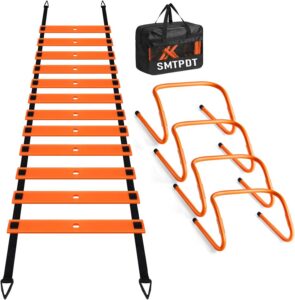
Agility Ladder,Soccer Training Equi…
Newly Upgraded Durable Hurdles–Stronger & More Reliable:We’ve upgraded our agility hurdles with premium materials and a…
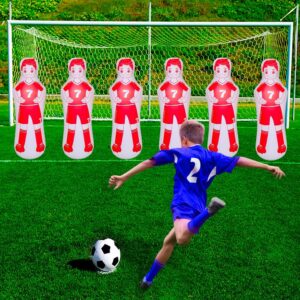
ZHUYNXIR Inflatable Soccer Dummy, S…
Features: Inflatable dummies are designed to be filled with water at the bottom and are very…