A Beginner’s Guide to Goalkeeper Positioning
Positioning is the single biggest multiplier of a goalkeeper’s effectiveness. Good positioning reduces the number of truly difficult saves, improves your angle coverage, and gives your teammates confidence. This guide breaks down core principles and drills so beginner keepers can make smarter decisions on the field.
Read these practical steps and start applying them at training—small changes to where you stand and how you move will show up quickly in match situations.
Why Positioning Matters
Positioning controls the shot-taker’s options. When you place yourself correctly relative to the ball, the goal, and defenders, you increase the chance a shot is either saved, deflected, or forced wide. Good positioning also shortens reaction time and reduces the need for risky full-stretch dives.
Understand Angles and the Goal Frame
Think in straight lines: visualize a line from the ball to both posts and stand on the bisector that reduces the open net. As the ball moves, your angle changes—small steps keep you square. Practice this mental geometry in training so it becomes automatic in games. Using training mannequins helps simulate attackers and forces you to adjust angles under pressure; a useful option is to include Soccer Training Mannequins in your drills.
Base Position and Ready Stance
Your base position depends on where the ball is: if it’s central and long, play deeper to cover the lob and rebound; if it’s near the box, step up to reduce angle. Keep knees bent, weight on the balls of your feet, and hands slightly forward—this ready stance helps you push in any direction quickly. Wearing a suitable jersey that moves well and keeps you comfortable can make small posture adjustments easier; consider options like Soccer Goalkeeper Jerseys when choosing training kit.
Moving with the Ball: When to Step Up or Drop Back
Two basic reactions: step up to narrow the angle when the ball is in or near the attacking third; drop back when the ball is cleared long and the attacker has time to run onto it. Use quick, controlled shuffles rather than big lunges—this keeps you balanced. For practicing these live-close adjustments, include return drills that create unpredictable trajectories, such as exercises with Soccer Kick Return Trainers, to train judgment and first-step speed.
Shot-Stopping Positioning
When facing shots, your positioning sequence should be: 1) read the body and ball, 2) set your depth relative to the shooter, and 3) fine-tune angle with small steps. For repetitive shot training to build this timing, use devices that provide consistent rebounds and trajectories—practicing with Soccer Rebounder Nets increases rep count and reaction variety so you can focus on footwork and timing.
Dealing with Crosses and Aerial Balls
Crosses require decisive choices: come out to claim, punch, or guard the line. Your decision depends on the trajectory, traffic, and time. Work on judgment and timing by practicing scenarios that replicate crowded boxes—use training mannequins or defensive patterns to force split-second decisions and to rehearse how to step forward beyond the line to claim safely.
Communication and Decision-Making
Positioning isn’t just physical—it’s cognitive. Clear, loud commands (e.g., “Keeper!”, “Near!”, “Mine!”) reduce collisions and confusion, letting you occupy the optimal spot. Help your defenders organize so you face fewer one-on-one emergencies. Practice this in small-sided drills and scrimmages where you constantly reset position based on both the ball and teammates’ locations.
Training Drills to Improve Positioning
Drill choices should emphasize repetition, realistic pressure, and varied angles. Combine footwork, reaction, and decision-making in short circuits. Speed- and agility-focused gear speeds up first-step and recovery work—use structured kits like Soccer Speed and Agility Sets for ladder work, cone patterns, and short-sprint recovery.
Other useful drill partners include rebound tools and reactive devices that create unpredictable saves—these build reading skills and emphasis on correct starting positions. Regularly rotate between shot, cross, and distribution drills so your positioning habits generalize across match situations.
Equipment and Protection for Confident Positioning
Confidence in your equipment lets you position more aggressively. A reliable pair of gloves improves catching and parrying; for keepers who want solid grip and finger protection, consider options like the Renegade GK Fury Goalie Gloves.
Protective tape supports fingers when claiming heavy shots—if you tape regularly, check out specialized options such as Goalkeeper Finger Protection Tape. For glove maintenance that preserves grip and longevity, glove-specific products are helpful; consider using Goalkeeper Glove Care Products as part of your routine.
Common Positioning Mistakes to Avoid
- Standing flat-footed—reduces range and reaction speed.
- Overcommitting to a direction—creates open space to the opposite post.
- Failing to adjust depth based on the ball—either too deep or too far out.
- Poor communication—leads to collisions or unmarked threats on crosses.
Quick Checklist: Positioning Essentials
- Read the ball and check goal-post lines before moving.
- Maintain a balanced ready stance—knees bent, weight forward.
- Use small steps to adjust angle; big lunges only for committed saves.
- Communicate constantly with defenders on set pieces and crosses.
- Train with reactive tools and speed drills at least twice weekly.
- Keep gloves and protection gear maintained for confident claiming.
FAQ
- How far off my line should I stand? It depends: play deeper for long-range threats and come out when the ball is inside the box to narrow angles. Use small forward steps rather than big leaps.
- How do I improve lateral movement? Regular speed-and-agility circuits, ladder drills, and short-shuffle repetitions improve first-step speed and recovery; structured sets like Soccer Speed and Agility Sets help build consistent footwork.
- Should I always catch crosses? No—catch if you can do so cleanly; otherwise punch or parry to safety. When crowded, prioritize clearing the immediate danger over holding the ball at all costs.
- What drills teach decision-making under pressure? Small-sided games with quick restarts and mixed-shot circuits force rapid choices. Adding reactive devices like rebounders accelerates judgment under realistic rebound conditions; consider practicing with Soccer Rebounder Nets.
- How often should I replace gloves? Replace when grip declines materially or seams/palm wear through. Proper care with Goalkeeper Glove Care Products can extend useful life.
Conclusion — A Practical Takeaway
Positioning is practiceable: focus on angle awareness, small controlled adjustments, and repetition under realistic pressure. Start each training session with 10–15 minutes of angle drills, combine them with speed and rebound work, and maintain reliable gear so you can position and act without hesitation. Those habits create safer, more consistent goalkeeping.
Products Featured in This Article
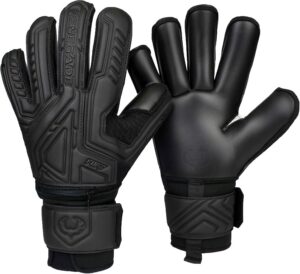
Renegade GK Fury Goalie Gloves with…
Product description Best In Class Finger Protection & Punch Performance Endo-Tek Pro FingersavesDuraTek 4+2MM Latex Backhand6D…