How to Improve Soccer Dribbling Skills Without a Coach
Improving dribbling on your own is entirely possible with the right structure, consistent tempo, and focused repetition. You don’t need a coach to practice quality drills—just a plan, purpose, and a few simple pieces of equipment.
This guide lays out practical, step-by-step ways to build close control, speed with the ball, and decision-making under pressure. Where helpful, I’ll point you to training tools you can use to make solo sessions more effective.
1. Set short, specific goals
Start each practice with a single measurable goal: e.g., “keep the ball within 2 feet of your feet for 10 minutes,” or “complete 5 timed slalom runs under 8 seconds.” Having concrete targets makes solo practice productive and keeps you accountable.
2. Warm up with footwork and mobility
Foot speed and coordination are foundations for effective dribbling. Spend 5–10 minutes on dynamic mobility, then 5–10 minutes on quick-feet patterns with an agility tool. A dedicated Soccer Speed and Agility Sets gives you ladders, cones, and hurdles to structure progressive warm-ups and footwork drills.
3. Master close control with slow, focused repetitions
Quality over quantity early on: practice soft touches, both inside and outside of the foot, pulling the ball back, and toe-touches. Use a small area (a 5–8 yard square) and force yourself to move the ball only with the inside/outside of your feet for 5 minutes straight. For structured footwork patterns that translate directly to dribbling, an Agility Ladder,Soccer Training Equi… product works well to sequence touches and rhythm into your session.
4. Progress to change-of-direction and speed
Once your touch is consistent at slow speeds, add change-of-direction and acceleration. Set up short slalom lines and cone gates; practice sharp cuts with the ball and immediately accelerate. Use a training ladder-type set that includes cones and hurdles to build the coordination for quick directional shifts—an option like the Agility Ladder, Soccer Football Tra… lets you combine ladder drills with cone patterns so you can progress safely from touch to top speed.
5. Simulate defenders and use obstacles
Dribbling isn’t just technique—it’s manipulating space and reacting to pressure. Solo players can simulate defenders with mannequins or inflatable dummies to practice changes of direction and shielding. Training around static targets forces you to practice realistic angles and ball protection; consider adding Soccer Training Mannequins to your session for more game-like reps.
6. Add reactive drills to train decision-making
Decision speed separates good dribblers from great ones. Use random cues (a whistle, a phone timer, or colored cone signals) to force instantaneous choices: cut left, poke right, or feign and accelerate. Combine these with ladder or cone layouts to practice the footwork you’ll need when a defender commits.
7. Use rebounders and wall work to improve first touch
Your first touch after contact is critical in tight dribbling situations. Rebounders mimic awkward bounces and imperfect passes so you can train controlled touches under varying speeds. Solo players get high-repetition, realistic touches from a Soccer Rebounder Nets, which are excellent for trapping, turning, and immediately accelerating with the ball.
8. Build rhythm with circuit training
Create a 20–30 minute circuit that mixes technical touches, short sprints, feints, and small-sided finishing. Rotate 4–6 stations—ladder quick-feet, cone slalom for ball control, a mannequin obstacle, rebounder touch, sprint with first-touch, and a low-intensity recovery jog. Tools like multi-piece agility kits, for example the Agility Ladder, Soccer Football Tra…, let you set up full circuits quickly and keep sessions varied.
9. Measure progress and keep a simple log
Track time, reps, and perceived difficulty. Record specific metrics: slalom time, number of successful change-of-direction reps before losing control, or successful feints in 1-on-1 practice. Revisit the same drill weekly—small consistent gains compound into real skill improvements.
10. Make solo shooting and finishing part of dribbling practice
Dribbling often ends with a pass or shot; combine your dribble runs with an immediate finish to complete the skill chain. For practicing run-and-shoot or chip-and-receive patterns on your own, consider equipment that returns the ball or helps set up repeated deliveries—the Soccer Kick Return Trainers can speed up repetition and reduce time spent chasing loose balls.
Quick checklist: Solo dribbling session
- Goal for the session (example: 10 minutes close control)
- 5–10 min dynamic warm-up + footwork ladder
- 10–15 min technical touches (inside/outside, pullbacks)
- 10 min change-of-direction + acceleration
- 5–10 min reactive decision drills
- 5–10 min finishing or rebound work
- Log results and one focus for next session
FAQ
- How often should I practice dribbling alone?
3–5 short focused sessions per week is better than one long session. Consistency and quality matter most.
- How long should each solo session be?
20–40 minutes of focused work is ideal. Include warm-up and cool-down—avoid mindless repetition.
- Do I need special equipment?
No—basic cones or household objects work. For efficient progress use targeted tools like a Soccer Dribbling Trainers to practice specific patterns and a rebounder for touch repetition.
- How do I practice decision-making alone?
Introduce random cues (phone beep, partner shout if available) or set up multiple colored gates and call colors from a list while you dribble through—this forces split-second choices.
- How long until I see improvement?
With focused, measurable practice you can notice better control in 2–4 weeks and clearer speed+decision gains in 6–12 weeks. Track metrics to confirm progress.
Conclusion
Solo dribbling improvement is a mix of disciplined repetition, progressive overload, and simple feedback. Use ladders, cones, mannequins, and rebounders to simulate game demands, keep sessions short and specific, and measure small wins. Over time, these focused habits will translate into cleaner touches, quicker decisions, and more confidence on the ball.
Products Featured in This Article
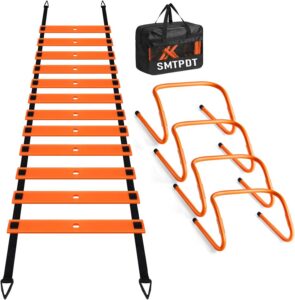
Agility Ladder,Soccer Training Equi…
Newly Upgraded Durable Hurdles–Stronger & More Reliable:We’ve upgraded our agility hurdles with premium materials and a…
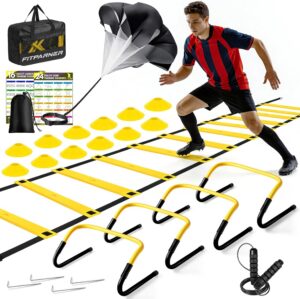
Agility Ladder, Soccer Football Tra…
The Ultimate All-in-One Agility Soccer Training Equipment Kit: This comprehensive agility training equipment provides everything needed…
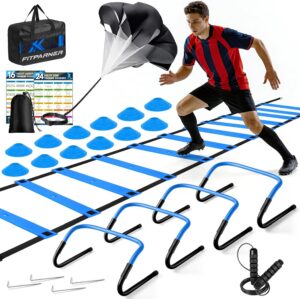
Agility Ladder, Soccer Football Tra…
The Ultimate All-in-One Agility Soccer Training Equipment Kit: This comprehensive agility training equipment provides everything needed…